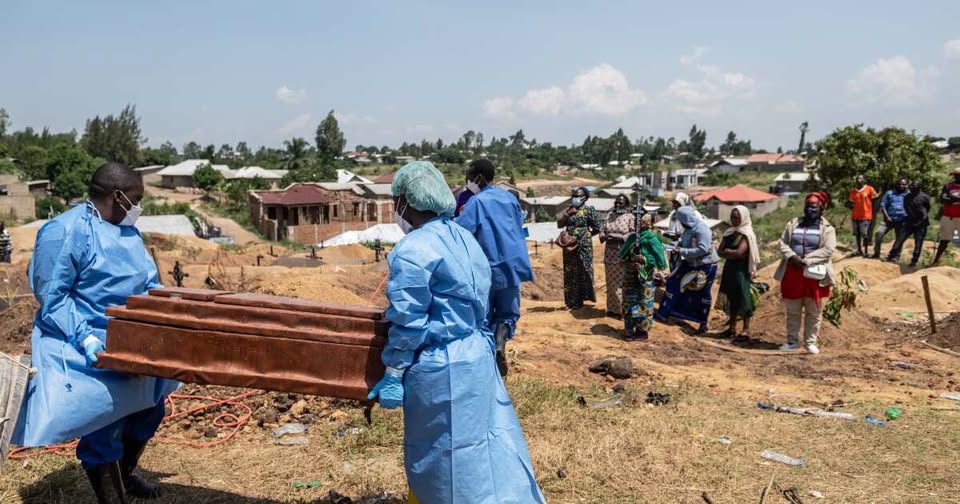
An Ebola outbreak in eastern Congo has crossed a grim milestone, with deaths passing 700 — and health officials warning the virus is now spreading faster than they can trace it.
What’s Happening
According to the World Health Organization, roughly 80% of new Ebola cases in eastern Congo are emerging from unknown chains of transmission. In outbreak response, that’s an especially concerning sign: it means health workers can’t reliably trace how most new patients were infected, which makes containing the spread significantly harder than in outbreaks where transmission chains are clearly mapped.
Why Untraceable Cases Are So Dangerous
Ebola containment strategies rely heavily on identifying everyone a confirmed patient had contact with, then monitoring or isolating those contacts before they can spread the virus further. When the majority of new cases can’t be traced back to a known source, that entire containment strategy becomes far less effective — health workers are left responding to cases appearing seemingly at random, rather than following a predictable chain.
Why Eastern Congo Specifically
Eastern Congo has faced repeated Ebola outbreaks over the past decade, complicated by an already difficult environment: regional conflict, population displacement, and limited healthcare infrastructure in many affected areas. These same factors make outbreak response consistently harder here than in regions with more stable conditions and stronger healthcare access.
The Global Picture
While this outbreak is concentrated in eastern Congo, Ebola’s history shows why international health bodies treat regional outbreaks seriously rather than as purely local concerns. Previous major Ebola outbreaks have demonstrated the virus’s capacity to spread beyond initial borders when containment efforts fall behind, which is why the WHO and international health partners typically mobilize significant resources even for outbreaks that haven’t yet crossed borders.
What Happens Next
Health officials will be focused on two priorities: identifying the source of untraceable transmission chains, and scaling up contact tracing and vaccination efforts in affected areas. Progress on bringing down the percentage of untraceable cases will likely be the clearest early signal of whether containment efforts are starting to work.