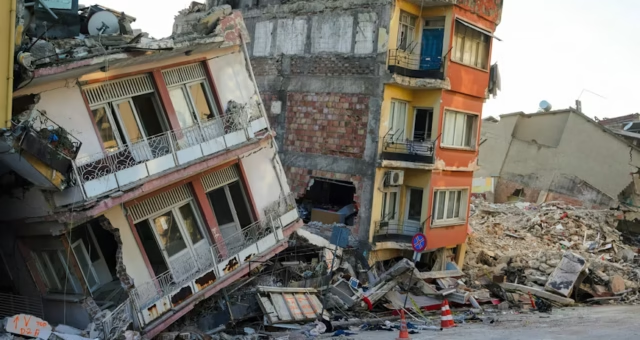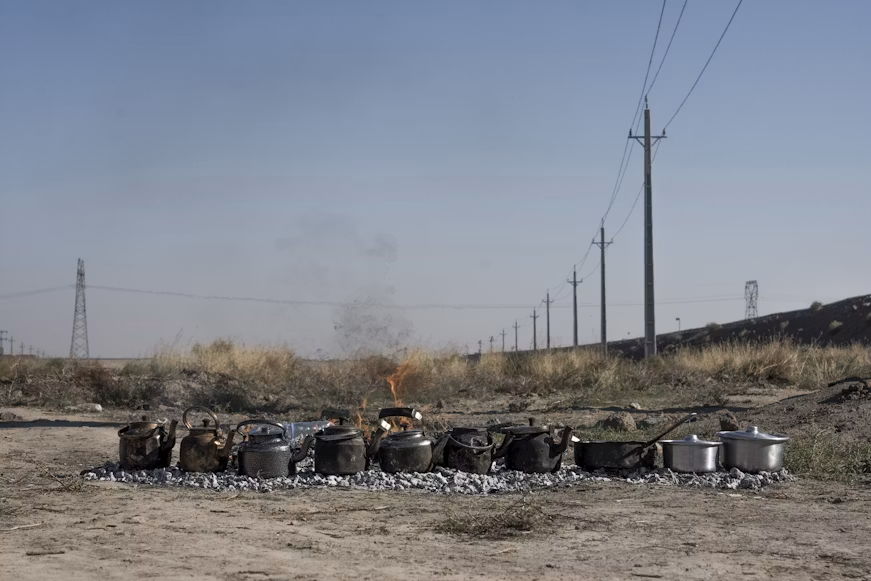
A war centered on Iran has spiraled into something with consequences far beyond the Middle East: a global fuel crisis that’s already reaching fuel pumps, shipping routes, and energy bills thousands of kilometers away — including across Europe.
How It Started
The conflict, which began with joint US-Israeli military operations against Iran earlier this year, escalated sharply this month. Fighting has centered heavily around the Strait of Hormuz, the narrow waterway between Iran and the Arabian Peninsula that around a fifth of the world’s oil trade passes through. Attacks on commercial vessels and energy infrastructure in the region have disrupted shipping and rattled global energy markets.
Which Countries Are Being Hit Hardest
Directly in the conflict zone: Iran, Israel, Lebanon, and several Gulf Arab states have reported significant damage and casualties, with millions displaced across the region. Kuwait has also reported strikes on land border posts and offshore oil infrastructure.
Countries facing fuel shortages: Nations that rely heavily on Gulf oil imports are feeling it fastest. The Philippines, which imports the vast majority of its oil from the Middle East, has declared a state of national energy emergency. Vietnam has reported fuel shortages and panic buying at pumps. Several other Asian economies with high dependence on Strait of Hormuz shipping routes are seeing similar strain.
Shipping disruption worldwide: Vessels are being rerouted away from the Strait of Hormuz and, in some cases, the Red Sea — adding time, fuel cost, and insurance risk to global trade routes.
Why This Matters for Europe
Europe doesn’t sit in the conflict zone, but it isn’t insulated either:
- Oil prices affect everyone. A disrupted Strait of Hormuz pushes global oil prices up, and European fuel and energy prices move with the global market, not just local supply.
- European economies are exposed. Multiple analyses point to rising risks of inflation and even stagflation in economies significantly dependent on Gulf energy imports — a category that includes several European nations, alongside Asian economies.
- Shipping costs ripple through supply chains. Longer, rerouted shipping paths mean higher costs for goods that eventually land on European shelves, from fuel to fertilizer-linked food prices.
- A tense diplomatic backdrop. The UK has already taken action tied to the conflict, banning an Iran-linked group after attacks connected to the war reached British soil — a sign the crisis isn’t staying contained to the Middle East.
What Happens Next
Much depends on whether the Strait of Hormuz stays a flashpoint or de-escalates. International maritime officials have called for restraint, noting thousands of seafarers remain effectively stranded near the strait amid the ongoing risk. Until shipping normalizes, expect continued pressure on fuel prices — including in Europe — regardless of how far you are from the fighting itself.