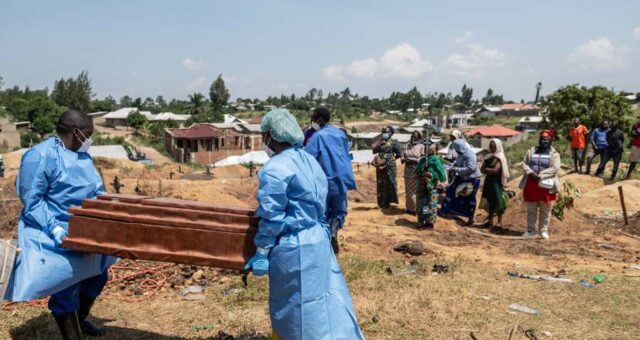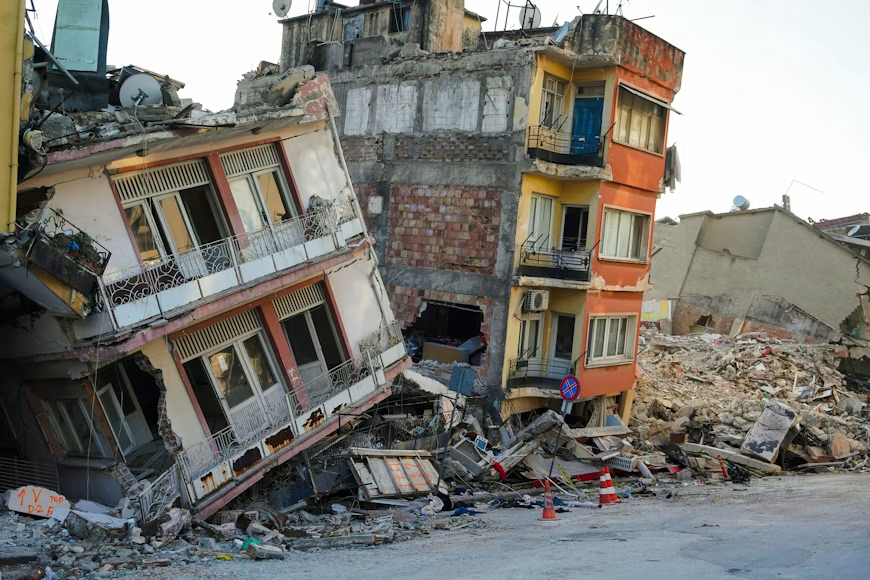
A powerful 7.4-magnitude earthquake struck western Colombia on Monday, killing more than 100 people, collapsing dozens of buildings, and trapping residents beneath rubble in what officials are calling the strongest quake to hit the country in over a decade.
What Happened
The earthquake struck with its epicenter in San José del Palmar, roughly 250 miles west of the capital, Bogotá, according to the U.S. Geological Survey. The quake was deep but powerful enough to be felt strongly across the region, including in Bogotá itself, where it interrupted phone service and sent people fleeing buildings despite the capital being far from the epicenter.
Death Toll and Hardest-Hit Areas
At least 111 people have been confirmed dead, with dozens more injured, according to authorities. The heaviest losses were reported in two regions:
- Risaralda department (home to the city of Pereira) — at least 40 deaths
- Valle del Cauca department (home to Cali, Colombia’s third-largest city) — at least 27 deaths, including three children
Additional deaths were confirmed in the Chocó, Caldas, and Antioquia regions. As rescue efforts continue, officials have cautioned that the full toll may still rise, particularly in Chocó — a largely rural, jungle region reachable mainly by boat or plane, which complicates assessment efforts.
Scenes From Cali and Pereira
In Cali, Mayor Alejandro Eder said more than two dozen structures had collapsed, with people still trapped inside as of Monday. “We have at least 12 critical points and 25 collapsed structures that we are responding to,” Eder told local radio, adding that two people — an elderly woman and a young girl — had already been rescued alive from the rubble.
Video circulating on social media captured the moment a building in Pereira collapsed, with onlookers screaming as the structure crumbled. The timing added to the disaster’s toll: Cali had just begun a weeklong festival celebrating the region’s Afro-Pacific culture, an event that typically draws hundreds of thousands of visitors to the city.
A Newly Sworn-In President Responds
Colombia’s president, Abelardo de la Espriella, who took office only days before the earthquake struck, convened an emergency committee to personally lead rescue efforts, according to reports from the scene.
International Response
Governments across the US, South America, Europe, and the Middle East have offered support to bolster Colombia’s rescue and recovery operations, reflecting the scale of the disaster and the urgency of the ongoing search for survivors trapped beneath collapsed buildings.
Why This Region Is Earthquake-Prone
Western Colombia sits along the Pacific Ring of Fire, the horseshoe-shaped band of seismic fault lines encircling the Pacific Ocean where the majority of the world’s earthquakes occur. The quake comes just weeks after two back-to-back earthquakes devastated neighboring Venezuela in late June, leaving many across the region already on edge before Monday’s disaster struck.
This is the latest in a string of major global disruptions this year — from the Iran war fuel crisis rattling energy markets to the Russia-Ukraine conflict still reshaping European security policy — a reminder of how frequently overlapping crises are testing emergency response systems worldwide in 2026.
What Happens Next
With search and rescue operations still active in both Cali and Pereira, the priority remains locating survivors trapped in collapsed structures. Additional disaster-response teams have been requested from Bogotá and Medellín to support overwhelmed local crews, and the death toll is expected to be updated as assessment continues, particularly in harder-to-reach rural areas.